



Sensory Integration theory
Sensory Integration is the process that goes on in the brain by which sensations from the skin, joints, eyes, ears, mouth, nose, internal organs, gravity and movement sense nerves are organised for use.
Praxis is the ability by which we figure out how to use our hands and body in skilled tasks, eating, dressing, using a pencil, building a structure and engaging in all we must do each day.
It also includes having a plan or knowing what to do as well as knowing or working out how to do it. It is an essential ability that enables us “to do” in this world. “Dys” means difficult or disordered.
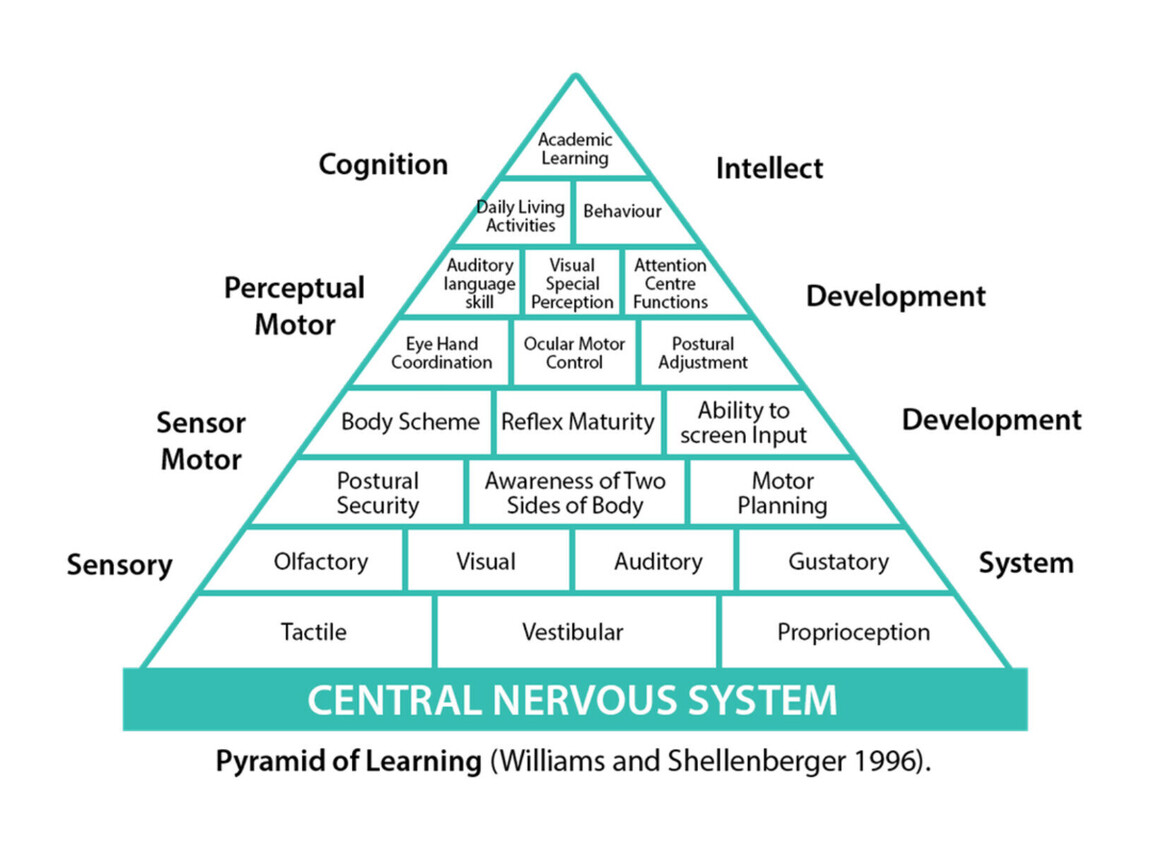
The assessment enables us to focus and understand the foundational senses of proprioception, (awareness of muscle stretch, body position including internal stretch for example bladder). Vestibular, (movement and balance) and Tactile, (touch-pain, firm pressure, light touch, vibration, pain and temperature). If sensory systems and/or sensory processing are impaired then three will be disruption to many higher level skills and behaviours.
The foundational senses begin to develop in utero and are engaged in neonatal development, attachment and emotional regulation.
An unborn child:
- Begins to develop awareness of their body and movement through movement against the resistance of the womb and amniotic fluid
- Generally, turns to the easiest position for birth at the correct gestational stage
- Experiences the touch of the womb and pressure as the bump is touched
- Experiences an intensely tactile experience in the process of the birth
- Can hear their mother’s heartbeat and voice, see changes in light and taste changes in the amniotic fluid with the mother’s diet but it is the three foundational senses that are essential to a safe, natural birth.
Replication of these prenatal sensations are soothing to the baby and young children; thus, we wrap new-borns tightly or mothers hold them close to soothe, we rock babies to sleep with rhythmic, predictable linear movement and we provide soft smooth textures in blankets and clothes etc.
Sucking, essential to infant survival in feeding, remains calming to young children who often suck thumbs, fingers or dummies. As the child matures, responsibility for these strategies shifts from the primary caregiver to the child and gradually become internalised and shift to cognitive approaches.
Body awareness, awareness of balance and interpretation of touch sensations are essential to and supported by early motor skill development and continue into adulthood to be the basis for problem solving, motor planning (praxis), experimentation and learning.
All of this enables ability to plan, function and have independence and ability to complete activities of daily living, also the ability to have safety mechanism within sensory system (such as temperature, pain and touch).
Difficulties in processing information from the sensory systems can be expressed in emotional, mental health, learning and self-expression difficulties.