



Sensory processing is the process of the nervous system receiving, interpreting and organising internal and external stimuli.
The stimuli is received by one of the eight senses (taste, touch, sight, sound, smell, vestibular, proprioceptive and interoceptive). Sensory integration is the ability to receive, organise and then perceive and respond appropriately.
Sensory modulation is the ability of the brain to receive and organise multiple stimuli. Sensory discrimination enables this, for example identifying different stimuli such as touch, force, sounds and so forth. Without ability to modulate, the brain can interpret the world as threatening, confusing, stressful and unsafe and behaviour will reflect this.
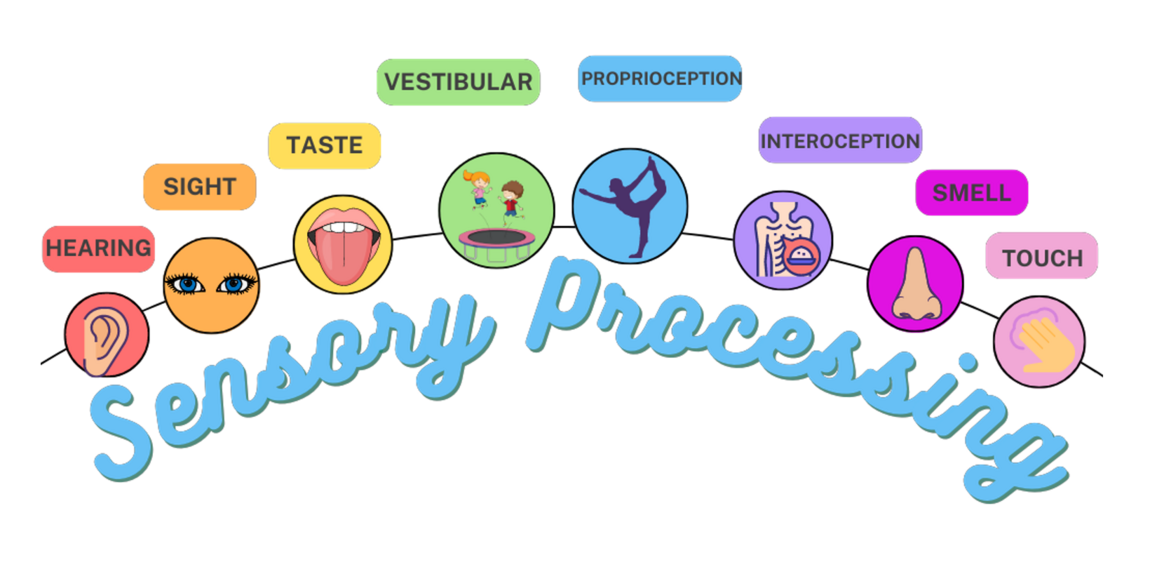
As in the image, there are 8 sensory systems. Five are commonly known (sights, sound, taste, smell and touch), three are lesser known but incredibly important to our daily functioning and survival; vestibular, proprioceptive and interoceptive.
The eight senses work together, processing the world around us and feelings from within, the way in which we move within it, respond and communicate with others, recognise and respond to danger and function on a daily basis.
This processing is a neurological process with messages from all (except olfactory senses) constantly being sent to our brains relay station, the thalamus, for processing. The processing allows the filtering of sensory input to be subconsciously responded to by the body or to go to the cerebral cortex for further interpretation and action.
To be hyper-sensitive (over responsive) to particular sensory stimuli can present in various ways depending on the sensory system involved and impact behaviour and ability to keep self safe in the environment or attend personal care impacting overall health and well-being.
Avoidant behaviour can be present, also meltdowns can occur further impacting health and well-being.
Hyper-sensitivity in the auditory system can present as being easily alarmed by loud noises, dislike of busy, loud and unpredictable environments, experiencing enhancement of certain sounds such as speech, tones or other sounds.
Hyper-sensitivity in the visual system can present as a preference for dimly lit rooms, avoidance of bright lights, sunshine, frequent use of caps and sunglasses on dull days.
In the olfactory (smell) and gustatory (taste) systems, this could be strong dislike and avoidance of certain odours and tastes. This could look like the dislike/avoidance of a person due to the shower gel they use, or avoidance of foods based on smell. It is worth noting that olfactory and gustatory are closely linked.
Tactile hyper-sensitivity can present as avoidance of self care such as hair-brushing, teeth-brushing, preference for certain clothing and avoidance of certain fabrics, with a strong dislike of labels/tags, seams and certain times of touch.
Hyper-sensitivity in the vestibular system can present as having poor posture, intense fear of heights, travel sickness and avoidance of physical activity with a preference for more sedentary activities.
Proprioceptive hyper-sensitivity would look like the avoidance of deep pressure such as hugs, heavy clothing, physical activity such as climbing and sports and an overall distress caused by unfamiliar movements.
Hyper-sensitivity in the interoceptive system can present as over-eating due to the fear of hunger pangs, frequent trips to the toilet, fear of heart rate increasing. Small sensations within the body can be very intense such as urge to go to the toilet.